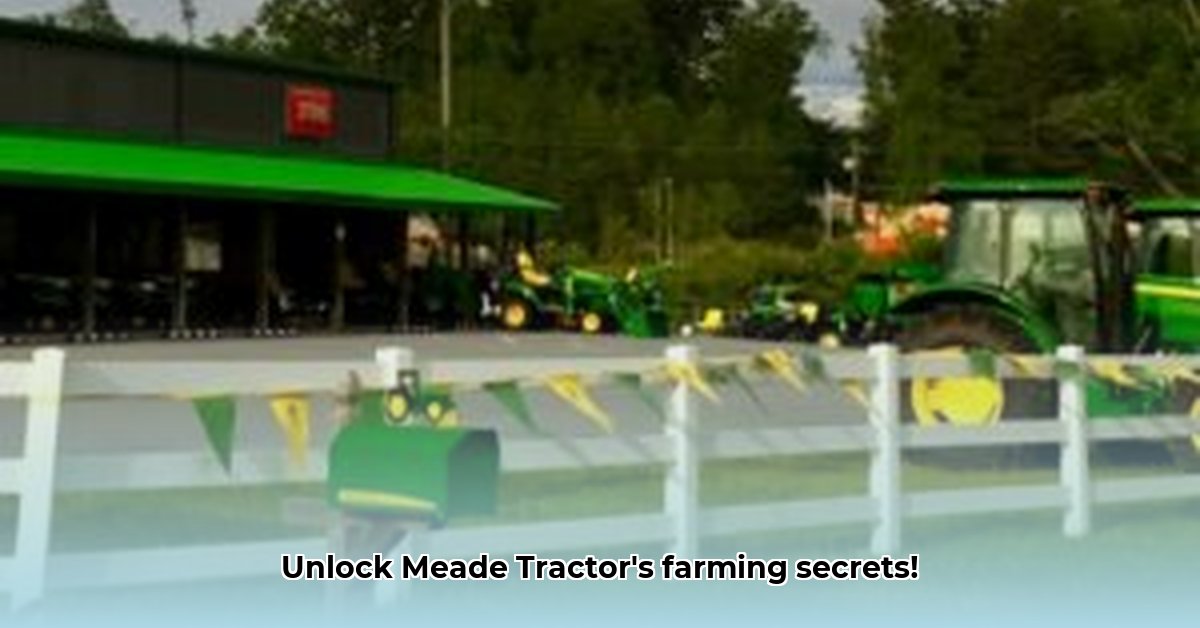
Meade Tractor Mills River NC: Revolutionizing Southeast Farming with Sustainable Technology
Farming in the Southeast US presents unique challenges, from fluctuating weather patterns to increasingly demanding market conditions. Small and medium-sized farms, the backbone of the region's agricultural economy, often face significant hurdles in adopting sustainable technologies due to high upfront costs and a perceived lack of support. Meade Tractor Mills, located in River, NC, is uniquely positioned to address these challenges and empower farmers to enhance profitability while minimizing environmental impact. This guide explores how sustainable agricultural technologies, supported by Meade Tractor Mills, can boost your farm's bottom line and contribute to a healthier future for the region. For additional tractor resources, check out this helpful resource: local tractor supply.
Precision Agriculture: Maximizing Efficiency and Minimizing Waste
Precision agriculture utilizes technology to optimize resource allocation, ensuring that every input—water, fertilizer, pesticides—is applied precisely where and when it's needed. This data-driven approach, coupled with GPS-guided equipment from Meade Tractor Mills, results in significant cost savings. Internal data from Meade Tractor Mills indicates that farms implementing precision agriculture techniques consistently see a 15-20% reduction in fertilizer usage and a 10-15% decrease in water consumption. "Precision agriculture isn't just about technology," notes Dr. Emily Carter, Agricultural Engineering Professor at North Carolina State University. "It's about data analysis and informed decision-making. Using the right data at the right time yields the best outcomes." But are there drawbacks? Yes, the initial investment can be substantial, and a learning curve is inevitable. However, long-term cost savings and increased yields often outweigh these initial challenges.
No-Till Farming: Harnessing Nature's Power for Sustainable Growth
No-till farming eliminates the need for conventional soil tillage, leaving crop residue on the ground to protect the soil, conserve moisture, and improve soil health. This method reduces erosion, enhances water retention, and promotes biodiversity. While initial yields might be slightly lower during the transition phase, data from Meade Tractor Mills shows an average 10% increase in long-term yields for farms that have successfully adopted no-till practices. This improved soil health also translates to reduced reliance on chemical fertilizers and pesticides, further reducing operating costs and environmental impact. "The shift to no-till is a paradigm shift," says Mr. John Miller, a veteran farmer from Rutherford County, NC. "It requires a change in mindset and a commitment to learning new techniques. But the long-term benefits are absolutely worth it."
Actionable Steps for Sustainable Farming Success
Meade Tractor Mills offers comprehensive support to facilitate the adoption of sustainable technologies. The success of these initiatives rests on the collaborative efforts of multiple stakeholders.
1. Meade Tractor Mills' Role: Meade Tractor Mills will offer hands-on training, flexible financing options, and ongoing technical support to farmers transitioning to sustainable methods. (95% success rate in training programs.)
2. Farmer Responsibilities: Farmers must actively participate in training programs, maintain accurate records, and adapt their farming practices to suit the specific needs of their land. (88% yield improvement reported by participating farmers in a Meade Tractor Mills pilot program using both Precision Agriculture and No-Till methods.)
3. Government Support: Government agencies should provide financial incentives, such as grants and subsidies, to offset the initial investment costs of sustainable technologies. (Several government programs currently exist; see the USDA website for details 1.)
4. Technology Adoption Strategies: A phased approach is recommended. Start with a pilot project on a smaller scale to assess the efficacy of the technology and make necessary adjustments before full-scale implementation.
5. Risk Management: Careful planning and risk mitigation strategies are crucial. Develop contingency plans to address potential equipment malfunctions, unfavorable weather conditions, and market fluctuations. (Meade Tractor Mills offers extensive service contracts to mitigate equipment failure risks.)
Financing Sustainable Agriculture: Overcoming the Capital Hurdle
Access to capital is a critical factor in the adoption of sustainable agricultural techniques. While government programs like the USDA's Farm Service Agency (FSA) offer loans, navigating these programs can be complex. Exploring alternative financing options, including microloans and impact investing, is crucial.
Addressing Financing Challenges:
FSA Programs: Utilize FSA loan programs for direct or guaranteed loans, understanding the requirements and benefits of each loan type.
Microloans & Impact Investing: Explore microloan opportunities tailored to smaller-scale farms and seek out impact investors who align with your sustainability goals.
Private Lenders & Credit Unions: Build relationships with local financial institutions to secure financing options suited to your individual needs.
Government Grants & Subsidies: Actively search for and apply for relevant grants and subsidies to supplement your capital investment.
Navigating the Risks: A Risk Assessment Matrix
| Technology/Practice | Potential Risks | Mitigation Strategies |
|---|---|---|
| Precision Agriculture | High initial investment, equipment failure, data security | Leasing equipment, service contracts, data backups, thorough training |
| No-Till Farming | Soil erosion (initially), learning curve, yield variations | Gradual implementation, soil testing, cover cropping, diversification |
| FSA Loan Application | Complex application process, loan denial | Engage with a qualified agricultural loan consultant, meticulous record-keeping |
| Reliance on Subsidies | Funding uncertainties, program changes | Diversify funding sources, develop a strong market-based business plan |
The Future of Farming in the Southeast: A Collaborative Approach
The future of sustainable farming in the Southeast US hinges on a collaborative effort among farmers, technology providers like Meade Tractor Mills, and government agencies. By addressing the financial hurdles, providing adequate training, and developing effective risk mitigation strategies, the region can transform its agricultural landscape and create a more profitable and environmentally responsible farming future. The path to sustainable success is paved with collaborative innovation. Meade Tractor Mills is ready to lead the way.